Key Takeaways
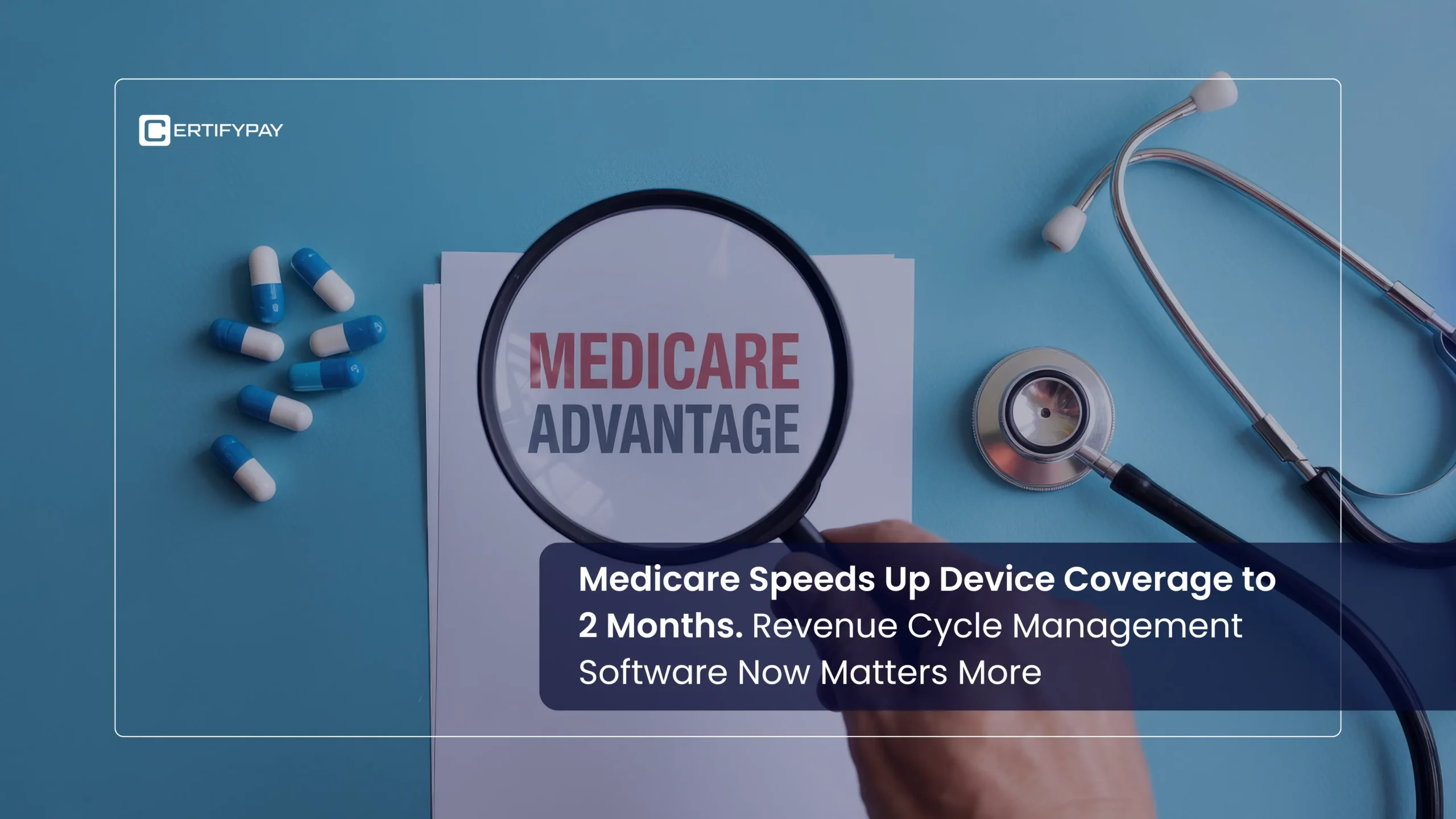
- RAPID cuts the time for Medicare to cover new devices from 12–18 months to about 2 months.
- CMS shares a first coverage decision on the same day the FDA approves the device.
- Then there is a 30-day public comment period. After that, coverage can be finalized.
- This applies to certain breakthrough devices, including Class II devices in the FDA TAP program and all Class III breakthrough devices.
- The older TCET pathway is now paused. RAPID takes its place.
- A Federal Register notice with a 60-day comment period is expected soon.
- For billing teams, faster coverage means they can bill sooner. It also reduces the gap between buying a device and getting paid for it.
Introduction
There is a problem that hospital billing teams know well.
A new medical device gets FDA approval. Your doctors want to use it. The clinical case is strong. But Medicare will not cover it yet. So, you wait. Sometimes 12 months, sometimes 18 months, and sometimes longer.
During that wait, you are stuck. You can buy the device early and hope for the best on reimbursement. Or you can wait for coverage and delay care. Neither option is good.
That wait also creates a billing mess. Your team manages claims against uncertain coverage. Denials go up. Staff time goes up. Revenue goes down.
Strong revenue cycle management software can help you manage that window. But until now, no one could make the window shorter.
That just changed.
On April 23, 2026, CMS and FDA launched the RAPID pathway. Breakthrough devices can now reach Medicare coverage in as little as two months. For hospital procurement and billing teams, that changes how you plan, buy, and bill for new technology.
Why the Old System Was a Real Problem
The gap between FDA approval and Medicare coverage had a name. People in the industry called it the “valley of death.”
It was not dramatic language. It described a real problem.
A device would get cleared by the FDA. It worked. Doctors wanted to use it. But Medicare had its own separate review process. That process took a long time. Often more than a year.
During that time, hospitals had hard choices to make.
Some bought the device and dealt with uncertain billing. That meant more manual work. More denied claims. More time spent on appeals. All for procedures that were clinically valid but not yet covered by Medicare.
Some hospitals waited. Patients did not get access to new technology as fast as they could have.
Either way, the billing team paid a price. The coverage gap created real cost, in staff hours, in denied claims, and in delayed collections.
What CMS and FDA Just Announced
Regulatory Alignment for Predictable & Immediate Device coverage, also known as RAPID.
Here is how it works.
When a qualifying device gets FDA approval, CMS now issues a coverage proposal on that same day. Medicare opens a 30-day comment period. After that closes, coverage can go live.
Start to finish — about two months.
Before RAPID, the two processes ran on separate tracks. FDA approval happened on one timeline. Medicare coverage followed on its own, much slower timeline. There was no coordination between the two agencies.
Now they move together.
The existing TCET pathway and the previous early coverage option are now paused for new devices. RAPID is the replacement.
A Federal Register proposed notice with a 60-day public comment period is coming soon. That will lock in the full implementation details.
Who Qualifies
Not every device gets the RAPID timeline. Two groups qualify:
- Class II Breakthrough Devices enrolled in the FDA’s Total Product Life Cycle Advisory Program (TAP).
- All Class III Breakthrough Devices. These treat serious or life-threatening conditions. All of them qualify for RAPID automatically.
The FDA Breakthrough Device program already sets a high bar. Devices in that program have to show real clinical advantages over existing options. RAPID does not lower that bar. It removes the coverage delay for devices that already meet it.
What This Means for Procurement Teams
Procurement planning for devices used to follow a long cycle.
Track FDA approval. Wait for the NCD process. Wait for it to finish. Plan deployment around expected coverage timelines. Factor in 12 to 18 months of uncertainty.
Under RAPID, that cycle gets much shorter.
You Can Move Faster
The financial risk of early adoption drops. Coverage is two months away, not 18. That changes the risk math on procurement decisions.
More Devices Will Need Decisions More Often
In an 18-month coverage world, the pace of new covered devices was slow. In a 2-month world, it speeds up. Your teams will face more qualifying devices entering the market — and needing evaluation — more frequently.
Budget Models Need Updating
Old capital planning assumed a long lag between device purchase and billing eligibility. That assumption no longer holds for RAPID-eligible devices. Models built on the old timeline will overstate uncertainty.
Commercial Payers Follow Medicare
When Medicare covers a device, commercial and managed care payers tend to follow. Faster Medicare coverage means faster alignment across your full payer mix.
For hospital and ambulatory customers already using procurement planning tools, RAPID means more frequent device procurement decisions — and a shorter window to evaluate clinical and financial fit before a device enters your billing environment.
Implications for Revenue Cycle Teams
Procurement changes are real. But the bigger shift is on the billing side.
Here is the problem in plain terms.
A device enters Medicare coverage in two months. Your billing team has that same two months — or less — to get ready.
That means:
- Loading the right procedure and device codes into your billing system
- Confirming payer-specific coverage rules and prior auth requirements
- Setting up claim edits so submissions go out clean
- Training billing staff on documentation requirements
- Watching early claims for denial patterns before they compound
In an 18-month coverage window, teams could do this slowly. In a 2-month window, slow does not work.
This is exactly where CERTIFYPAY makes a difference. CERTIFYPAY is built for fast billing eligibility activation. When a new device enters Medicare coverage under RAPID, CERTIFYPAY reduces the gap between device acquisition and reimbursement. Claims go out with the right codes, the right edits, and the right documentation triggers — from day one of coverage, not weeks later.
CERTIFYPAY works by connecting insurance verification, billing, and payment into one system. So, claims go out correct the first time, without delays or rework.
The teams that do well under RAPID will not wait for coverage to land and then start building workflows. They will prepare before coverage is final. That is what CERTIFYPAY’s billing infrastructure is built to support.
See how billing RCM operations can support faster device coverage cycles
The Coverage Gap Is Shorter, But It Still Exists
RAPID cuts the coverage gap. It does not eliminate it.
There is still a two-month window between FDA approval and final Medicare coverage. During that time, you may have patients receiving care with a device that is not yet fully covered.
Your billing team still needs to:
- Track which devices are in the RAPID pipeline
- Know when coverage is expected to go live
- Prepare billing configuration in advance
- Handle any cases that fall in the gap period
CERTIFYPAY helps here too. Faster billing eligibility activation means the coverage-gap window, the period between when you acquire a device and when you can bill for it, cleanly shrinks. That directly reduces the revenue exposure hospitals carry every time a new breakthrough device enters their clinical workflow.
The hospitals that benefit most from RAPID will treat coverage activation as part of procurement planning. Not as something that starts after the coverage notice arrives.
Patient Balances Are Part of This Too
Here is something that gets overlooked in device reimbursement conversations.
When Medicare covers a new device, patients still owe their share coinsurance, deductible and cost-sharing tied to the procedure.
If your patient payment process relies on paper statements, no digital option, and manual follow-up – that balance sits uncollected. Even when the insurance claim was clean.
Healthcare payment solutions that work on digital channels (text, email, online portal), collect faster. Patients pay sooner. Accounts receivable stay lower.
This matters more as RAPID speeds up device coverage cycles. More new devices in coverage means more procedure types with patient balances attached. If your patient collections process does not keep up, you lose revenue on the back end even when the insurance claim goes through cleanly on the front end.
CERTIFYPAY covers both sides. Insurance claim processing and patient balance collection in the same billing infrastructure. That matters when device types are entering your billing environment faster than before.
Explore patient payment options for hospital billing teams
What to Watch Next
The Federal Register proposed notice for RAPID is coming soon.
A 60-day public comment period will follow. That notice will clarify implementation details — including how devices currently in the TCET process will be handled and the exact mechanics of the 30-day NCD comment window.
If you are in procurement or revenue cycle management leadership, the comment period is worth tracking. There may be adjustments before RAPID is fully finalized.
The direction is clear.
CMS and FDA have made a joint commitment to faster device coverage.
The valley of death between FDA approval and Medicare reimbursement is being closed by this design.
The question now is whether your billing infrastructure is ready to move at the new speed.
The Bottom Line
RAPID is good news for patients and hospitals. It brings faster access to new devices.
But faster coverage does not mean faster revenue by default. Your billing systems need to keep up.
Faster billing cycles require clean claims, quick activation, and faster payments – a traditional revenue cycle management software may struggle to keep up with.
CERTIFYPAY is built for exactly this kind of acceleration.
- Faster billing eligibility activation.
- Cleaner claims from day one of coverage.
- Faster patient payment collection on the back end.
All of it reduces the gap between device acquisition and full reimbursement, which is what RAPID was designed to close at the policy level.
Talk to our team about billing infrastructure for faster device reimbursement cycles.